Every job below is one we do ourselves across Redlands.
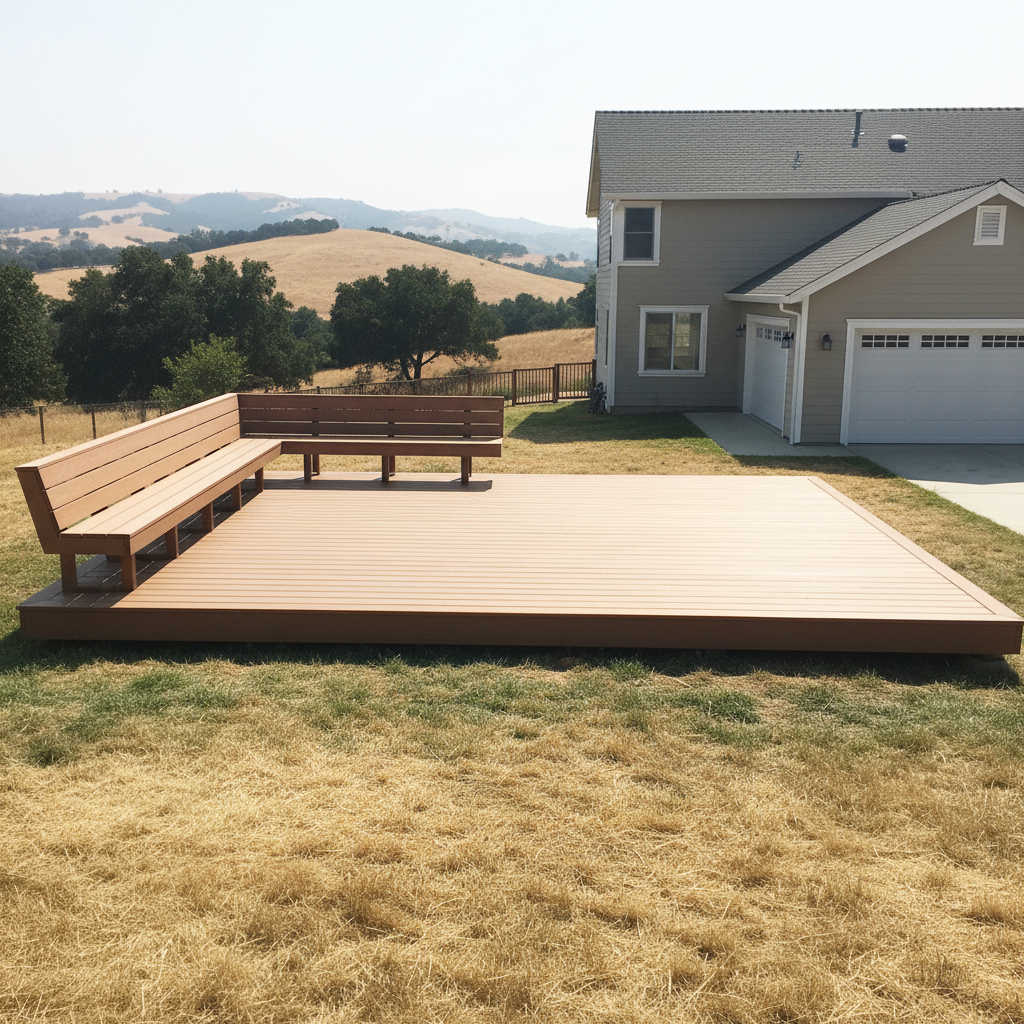
We frame new decks from the ground up, starting with footings sized to the soil and posts set on galvanized bases instead of buried wood. Joists get spaced to the span rating of whatever decking goes on top, and the ledger gets through-bolted and flashed so water sheds away from the house.
We draw it out before a single post goes in the ground, and talk through layout, railings and stairs with you first. We'll walk the property with you and talk through sun exposure, how the deck connects to the yard, and what the stairs have to clear for code.
A deck that feels springy or a railing that wiggles is usually a framing problem, not a cosmetic one. We pull the decking back, check the joists and ledger for rot, and replace what's actually failed instead of screwing a new board over a soft one.
Sun in Redlands dries out wood fast, and an unsealed deck can gray and crack within a couple of summers. We pressure wash, let it dry fully, sand rough spots, and apply a stain or sealer rated for the UV exposure out here.
When the frame underneath is still solid but the boards are cupping, splintering or graying out, we strip the old decking and install new boards on the existing structure. It's a faster, cheaper way to get a deck looking new without rebuilding what's still good underneath.
Composite boards don't get stained and resist the splintering that pressure-treated wood gets after a few summers. We install with hidden fastener systems so the surface stays clean, no visible screw heads across the whole deck.
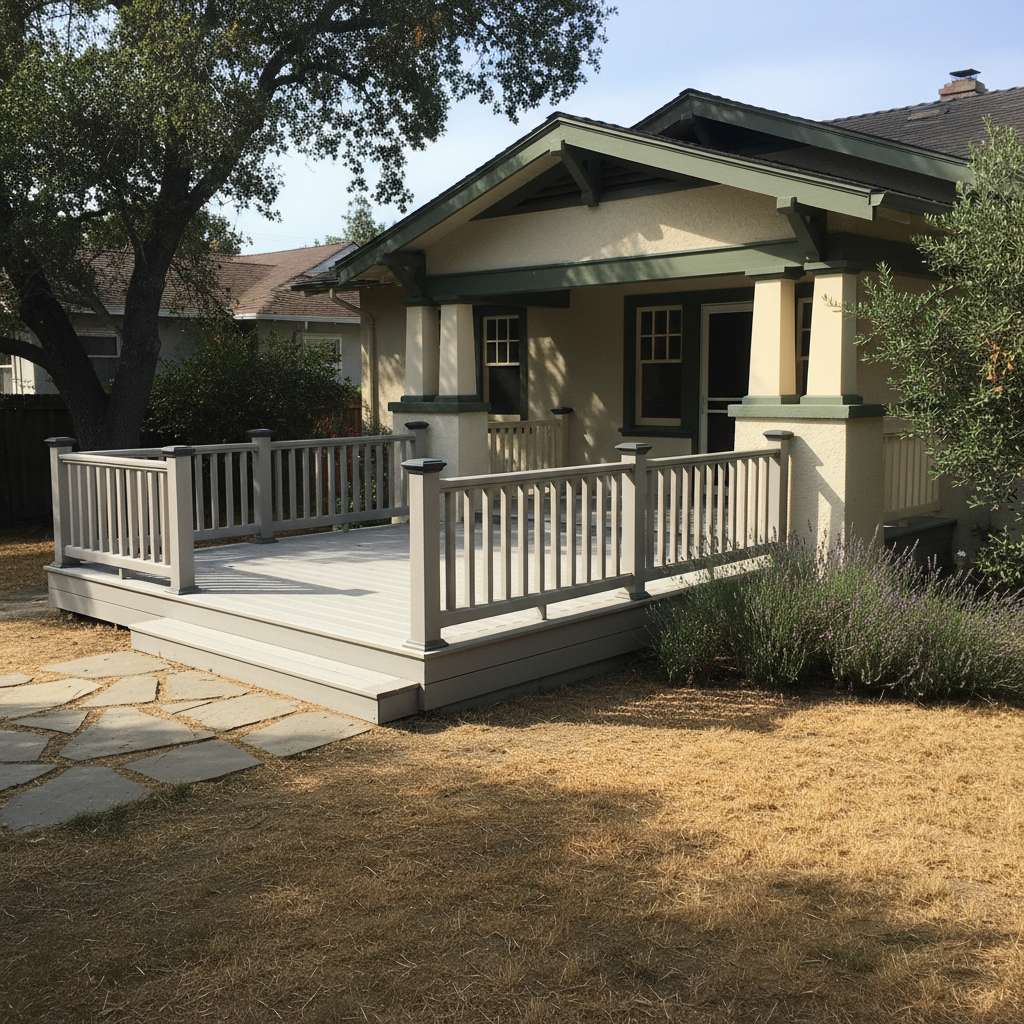
Railings have to meet a 36 to 42 inch height requirement depending on the deck's height and local code, and baluster spacing has to pass the 4-inch sphere test. We build to those numbers and bolt posts through the rim joist, not just toe-screwed into the decking.
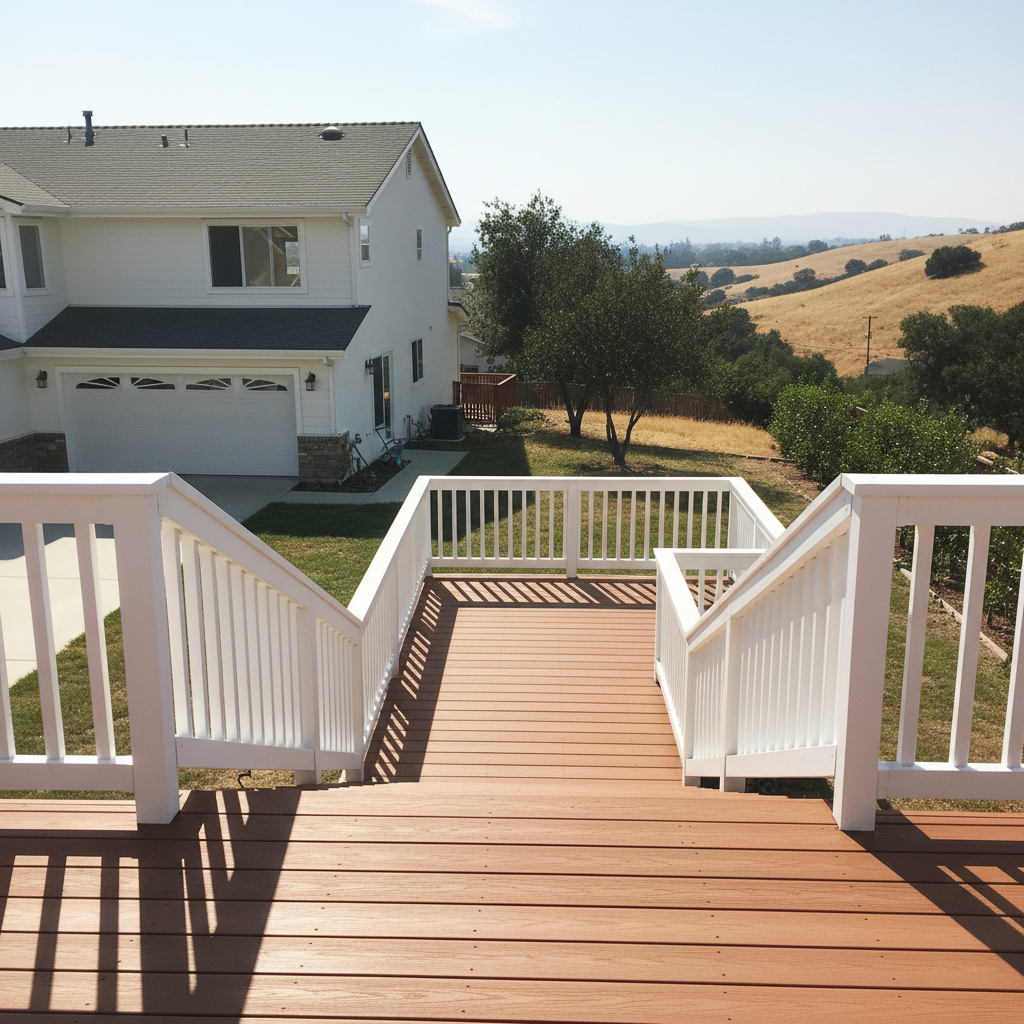
Stepped decks take extra attention at the stair stringers and at the point where two levels tie into the same ledger or beam. We size the beams for the combined load and keep the transitions code-compliant, not just visually lined up.
Old decks come down board by board where we can reuse the footings, or fully to the dirt if the posts have rotted below grade. We haul off every scrap of lumber and pull the old fasteners out of the house framing before anything new goes up.
A pergola or shade cover changes how much a deck actually gets used in July and August. We tie the posts into the existing deck framing or set new footings alongside it, depending on what the structure can carry.
Four steps, and no surprises in any of them.
You tell us what you want doing, we look at what is actually there, and we ask the awkward questions early.
In writing, itemised, free. If something might add cost later we flag it now rather than at the end.
Same crew throughout. We cover your floors, keep the dust down and tidy up before we leave each day.
You point out anything you are not happy with and we fix it before the invoice, not after.
We bring the same crew and the same standards to every city we serve.
Questions that come up once a project is actually underway.
Describe the problem and we will tell you what it probably is. No obligation.